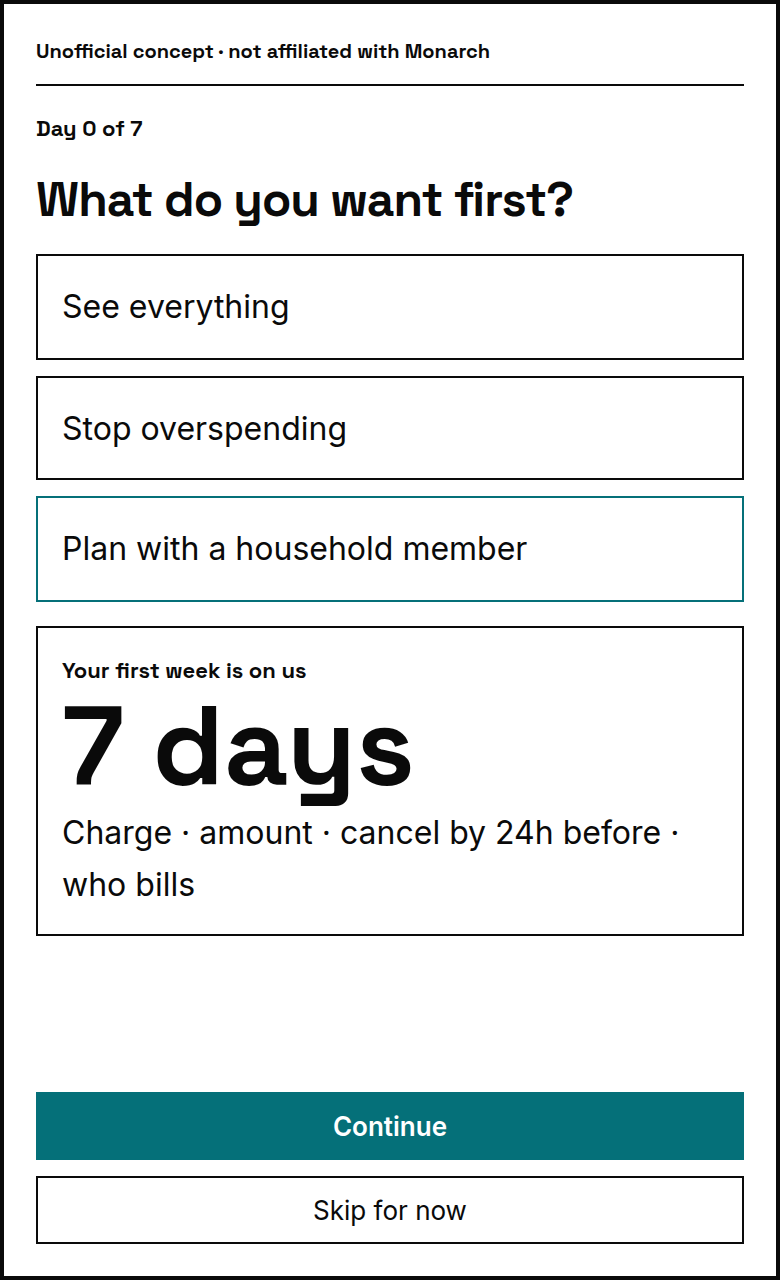
New households get seven days, with a card on file, to decide whether Monarch is worth paying for. This concept gives each of those days one small job.
Role
Product design
When
2026
Surfaces
Phone-sized web prototype
Status
Unofficial concept. Not affiliated with Monarch.
TL;DR
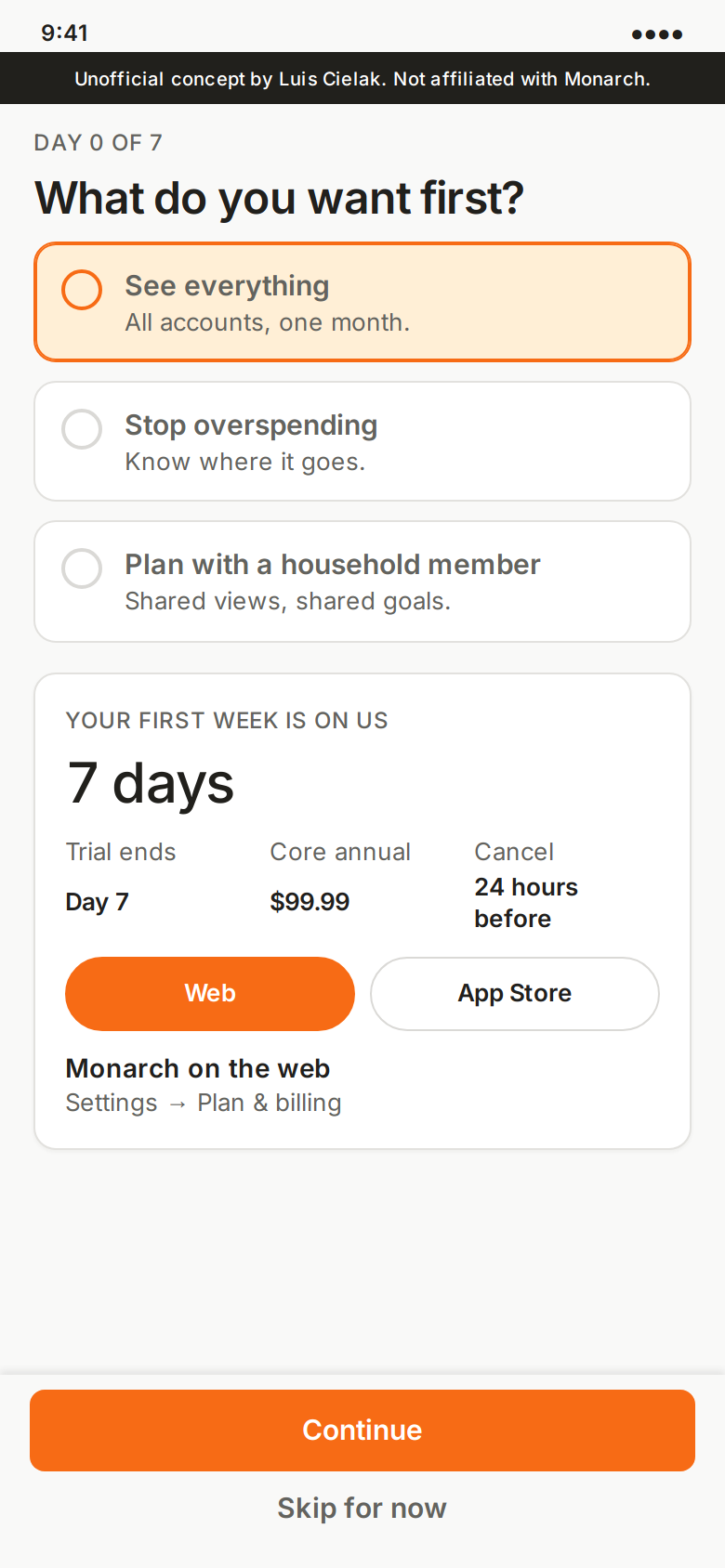
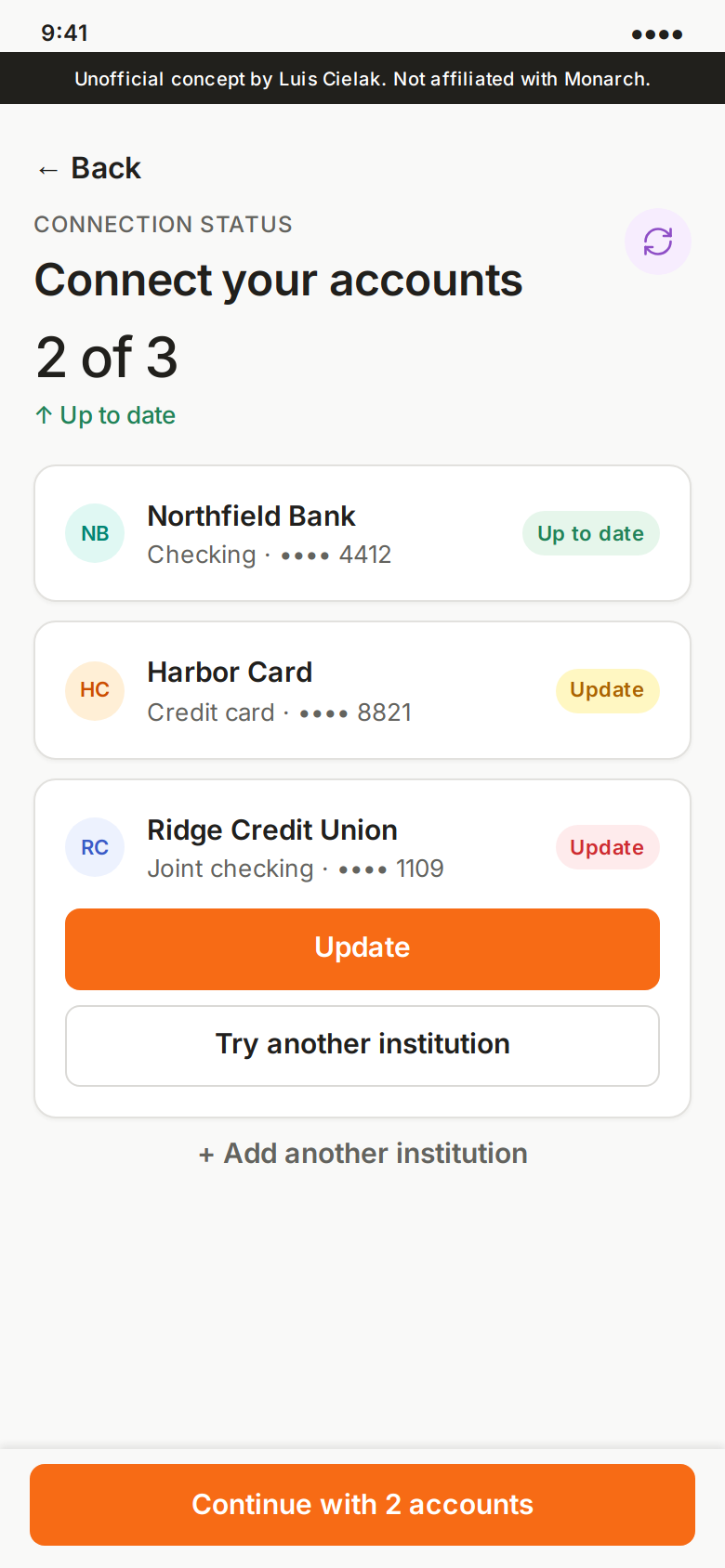
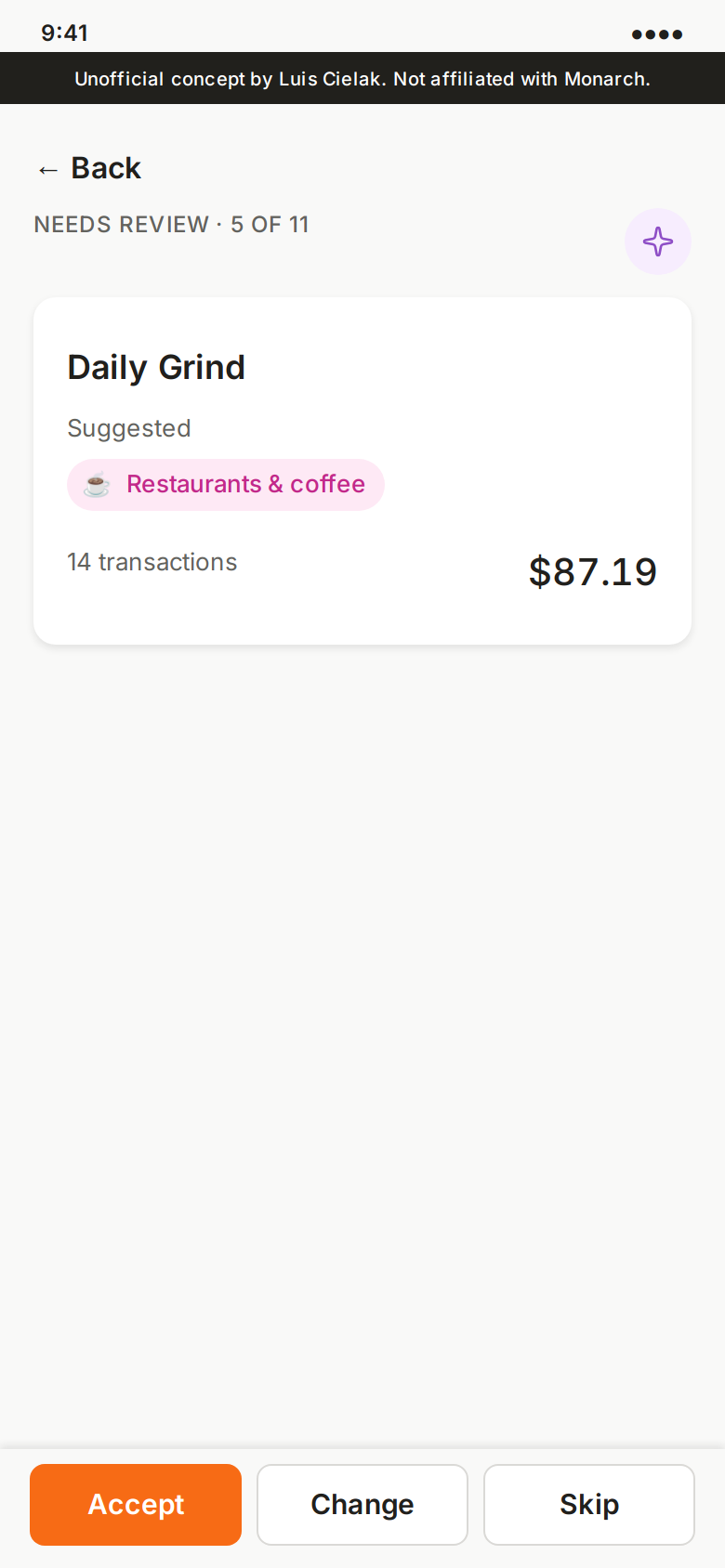
An unofficial concept for Monarch Money’s seven-day trial, which requires a card up front. Each day gives a new household one task. It starts by showing exactly when and how much they’ll be charged, before they connect a single account, and then helps them sort their transactions a group at a time with Quick Sort. You can click through the whole week in a phone prototype.
The week
Seven days, from Day 0 to Day 6. Every screen uses mock data.
Day 0
Connect
Quick Sort
Insights
Day 4
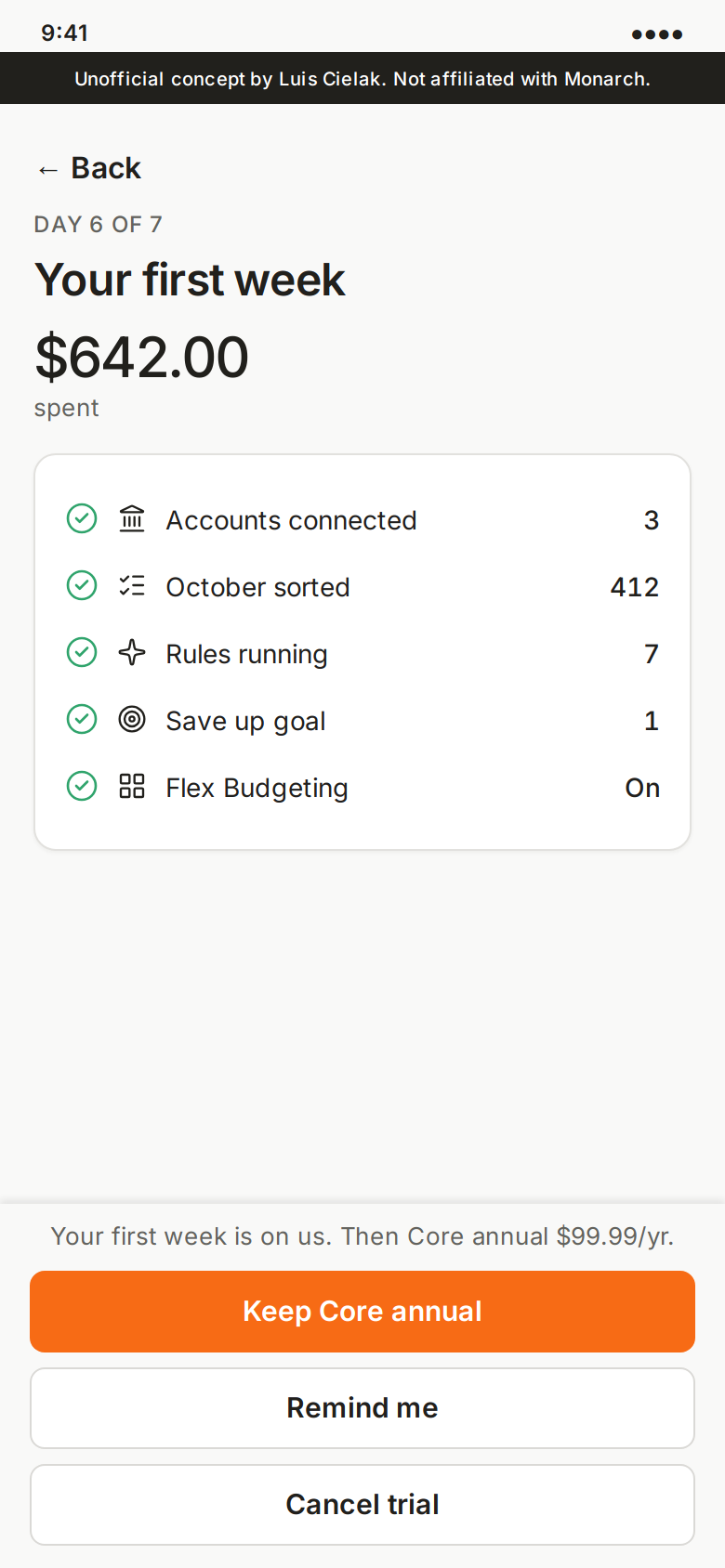
Day 6
00 — Why this case
This is a product I use at home.
I use Monarch with my household, and I built Finley, my finance agent, on Monarch’s official MCP. So I wanted to look closely at the first week, the seven days when a new household decides whether Monarch is worth paying for. This is a concept, so it doesn’t claim any conversion results.
01 — Where the first week goes wrong
New households get stuck on three things: the bill, the bank sync, and the categories.
Monarch asks for a payment method before the trial starts. To avoid a charge, you have to cancel at least 24 hours before the seven days are up. In public reviews, the complaints come back to the same few problems: transactions in the wrong category, accounts that stop syncing, transfers counted as spending, and a charge people didn’t see coming.
500US reviews read and tagged
183rated 1 to 3 stars
70of those 183 mention billing
47of those 183 mention sync
What reviewers said
Seven days is barely enough to finish setting everything up, much less evaluate whether the product actually works for you.
I canceled within the trial period and they continue to try to charge me for an entire year.
queenepeachie, App Store, 1 star, Sep 20, 2026
02 — How other apps run their trials
Among the eight apps I compared, Monarch is tied for the shortest paid trial. If Monarch keeps the trial at seven days, this concept is a way to make each of those days count.
No card or free
Card required
A month or more
YNAB34 days, no cardLunch Money30 days, no card
Copilot1 month, card on fileTiller30 days, card on file
A week or less
EmpowerFree, so no trial needed
Monarch7 days, card requiredSimplifiPaid at signup, with no trial
Card not confirmed
OriginNot confirmedUsually 7 days. The trial was paused during a $1 offer.
Rocket Money offers a 7-day Premium trial. Starting it asks you to select a payment method.
03 — The bet
Give every day of the trial one clear job.
Each day asks the household to do one thing. AI drafts the work, and the member decides whether to mark it reviewed, edit it, or skip it. A rule only starts running once they say so.
Key screens
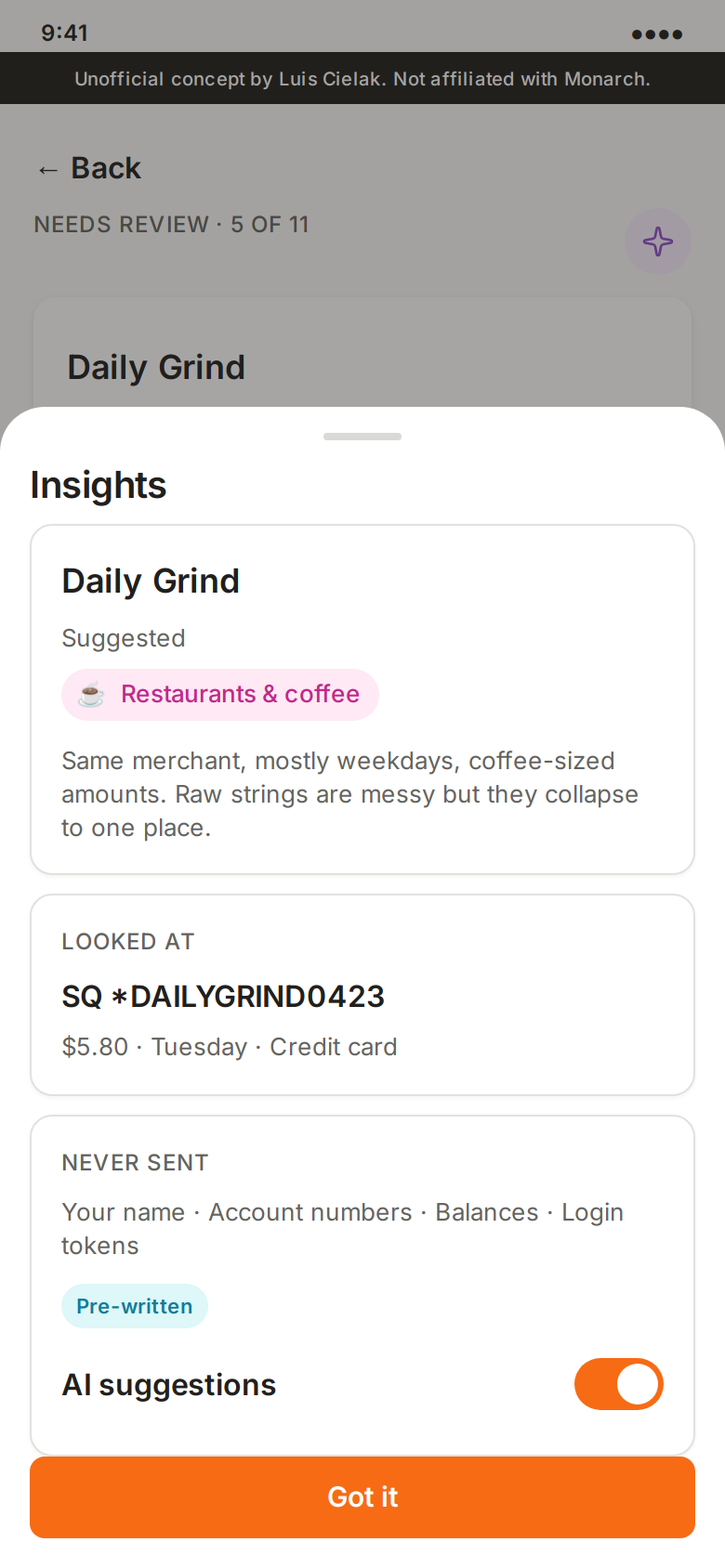
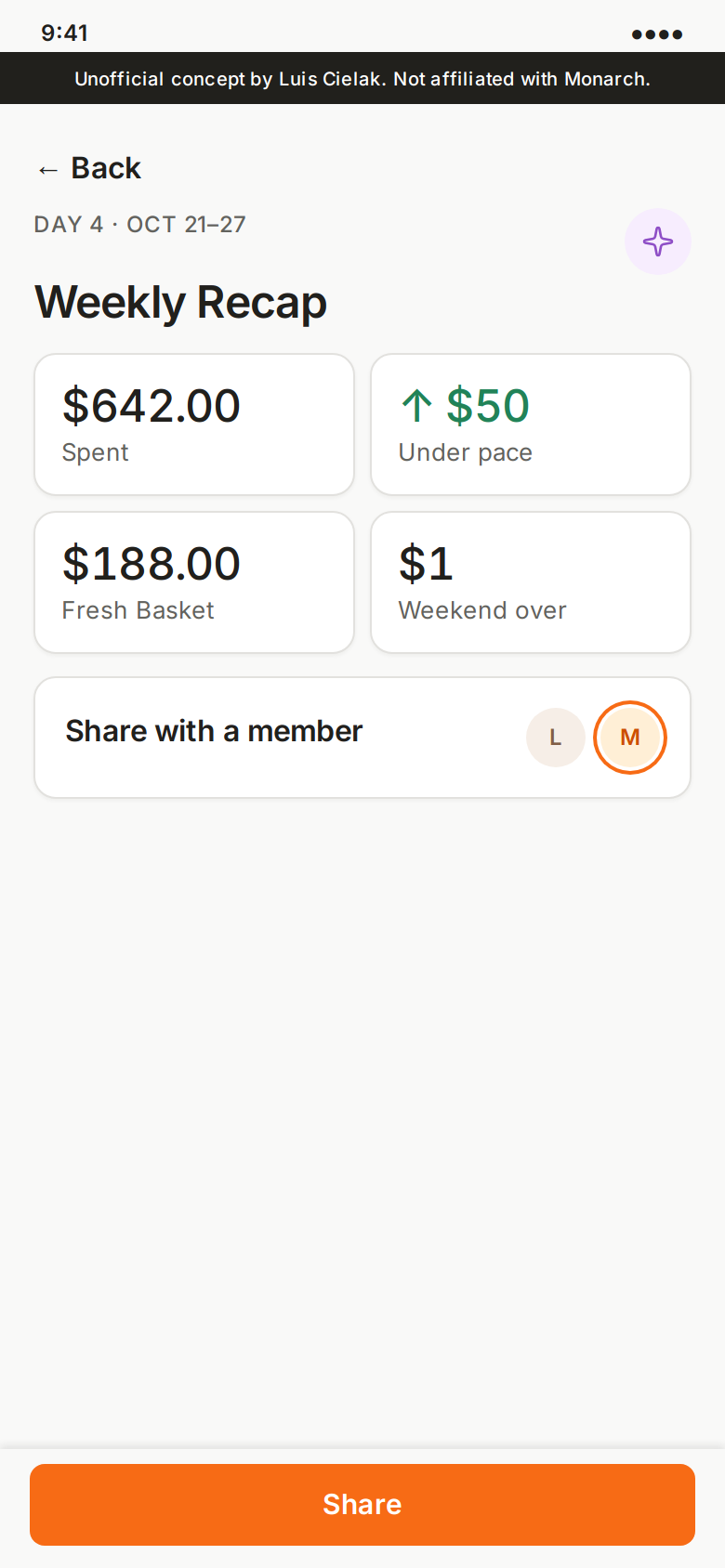
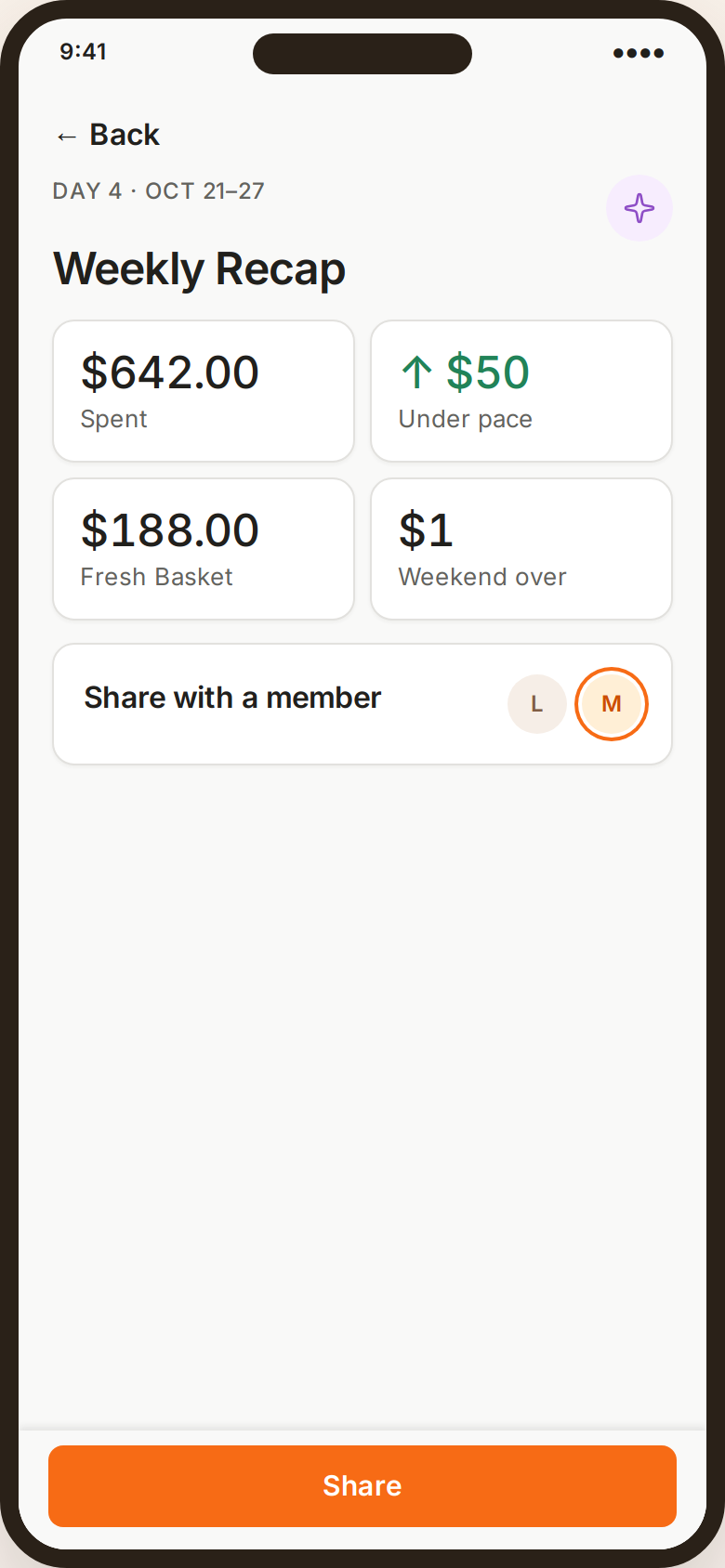
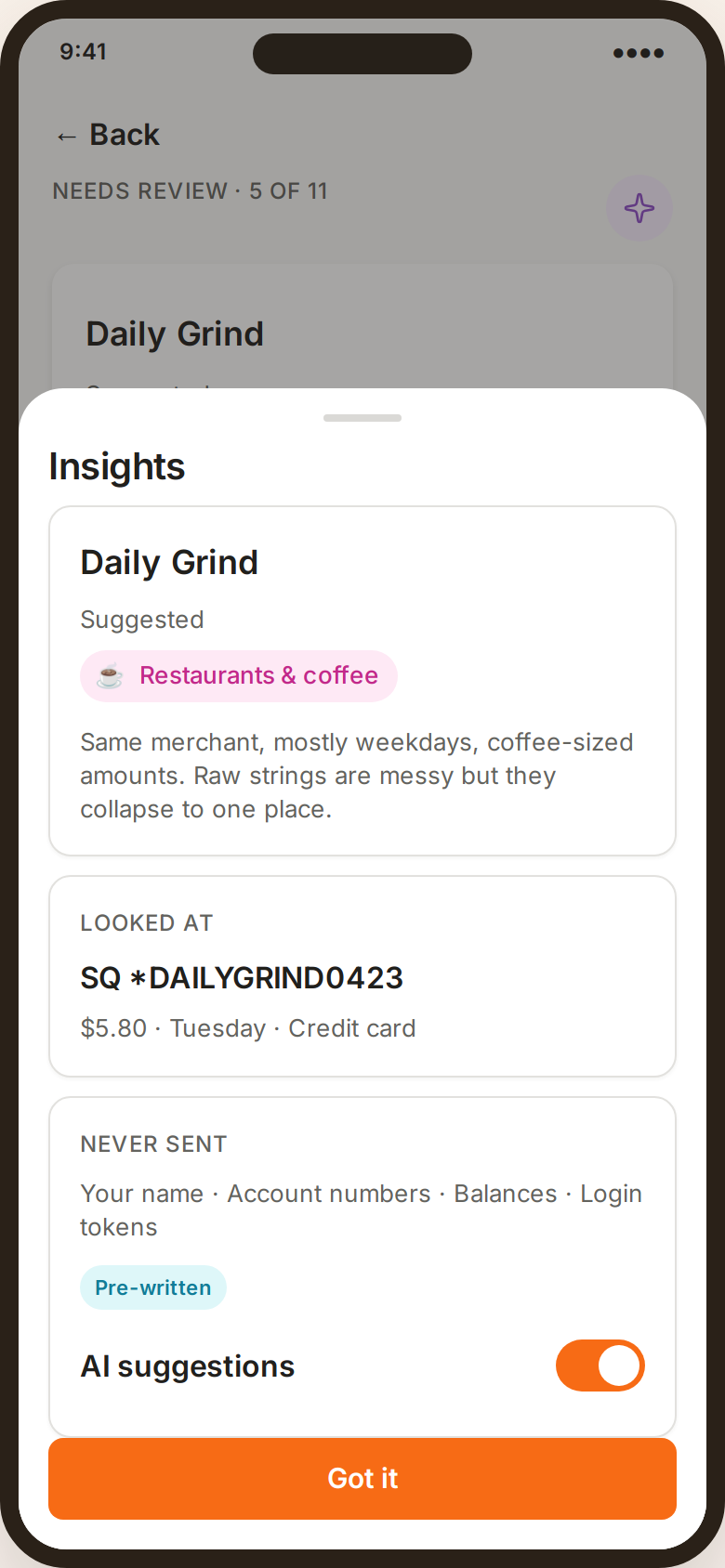
The Day 4 recap and the Insights privacy panel. Both use a mock household.
Day 4Weekly Recap
InsightsWhat the model never sent
From sketch to prototype: Day 0
Lo-fiDay 0 goal
UNOFFICIAL CONCEPT
DAY 0 · What do you want first?
( ) See everything
(•) Plan with a household
7 days · charge · cancel 24h before
[Continue] [Skip]
Mid-fiDay 0 goal
FinalDay 0 in the prototype
How I’d test it
These tests are proposals. There’s no public baseline for Monarch’s trial, so none of them have results.
Test 1: A trial timeline that says who bills you
If the paywall and Day 6 show the charge date, the amount, who bills you, and exactly where to cancel, fewer people will feel tricked, and just as many will still pay.
Control Today’s paywall.Variant A timeline card, a “remind me 2 days before” option, and a direct path to the right cancel screen.
Primary: Refund requests and billing tickets per 100 trial starts within 30 days of the first charge.Guardrail: Trial-to-paid rate.
Test 2: Quick Sort right after the first sync
Offering Quick Sort while motivation is highest will get more people to a clean month than waiting for a Day 1 nudge.
Control A Day 1 morning prompt.Variant Quick Sort offered on the sync-complete screen, with “later” always available.
Primary: Quick Sort completion within 48 hours.Guardrail: Day 0 drop-off before the first account connects, and the Day 2 return rate.
Test 3: Transfers first
Sorting transfers and card payments before merchants removes the biggest cause of wrong totals, so fewer categories need fixing later.
Control Biggest merchant groups first.Variant Transfers and card payments first, with a one-line reason for each.
Primary: Share of current-month transactions still uncategorized or edited again by Day 7.Guardrail: Time to finish Quick Sort, and the undo rate.
Test 4: Give the partner a job
A small task, like reviewing 3 transactions the AI wasn’t sure about, will get more partners active than a plain invite.
Control An invite from settings.Variant “Ask your partner” on unsure Quick Sort cards, with an invite that opens on those cards.
Primary: Partner active in week 2, per household that sent an invite.Guardrail: Invite-related support tickets, privacy complaints, and the inviter’s own Quick Sort completion.
04 — How I built it
In codeA phone prototype you can click through, filled with a mock household.
Quick SortQuick Sort asks an AI model for suggestions and falls back to pre-written ones if the call fails or times out. A Pages Function can run Workers AI behind it, with a hashed cache, a daily cap, a per-IP limit, and an 8-second timeout.
InsightsThe Insights panel shows what the model looked at and what it never received: the member’s name, account numbers, balances, and login tokens.
Try the week
Walk through Days 0 to 6 with a mock household. On this version of the site, the AI suggestions are pre-written.
Unofficial concept by Luis Cielak. Not affiliated with Monarch. Mock data only.
05 — What success would look like
7 daysTied with Origin and Rocket Money for the shortest trial.
CardRequired up front. Members have to cancel at least 24 hours before the trial ends, or the card is charged.
Fewer refundsThere’s no public baseline, so I don’t claim a conversion number. The goal is fewer refund requests while trial-to-paid holds steady.
06 — Reflection
Reading the reviews, a charge people didn’t see coming hurt trust more than a slow setup did, so I put the bill first and the busywork second. If I took this further, I’d start with the trial timeline test, since it’s the smallest change and the easiest to measure. The question I’d most like real data on is whether giving a partner one small job keeps the whole household around.